
In the ever-shifting landscape of mobile gaming, few titles have demonstrated the staying power of Garena’s Free Fire. By 2026, the battle royale had already spent more than half a decade dominating download charts and forging a global community of passionate players. The game’s survival over this period wasn’t just luck—it was a relentless cycle of fresh maps, innovative game modes, wild collaborations, and a constant pulse on what its audience craved. Yet, even the mightiest franchises know that stagnation lurks around every corner. Garena sensed the need for more than an update; it was time for a metamorphosis.
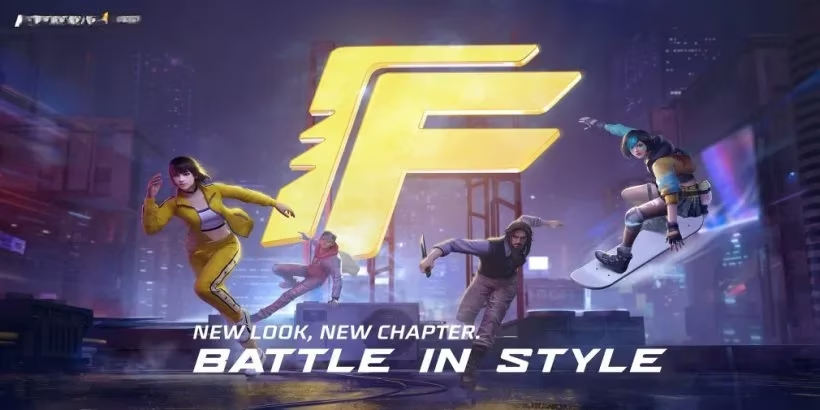
And so, in a bold move that rippled through the gaming sphere, Free Fire turned over a new leaf. Garena unveiled a complete brand rework that transformed the game’s entire look and feel, signaling that the battle royale was stepping into a sophisticated new era. The old visuals were replaced by a modernised logo—a sleek emblem that integrates a stylish knife icon, hinting at the edgy, close-quarters combat the game is known for. Paired with this new identity was a slogan that would become the campaign’s heartbeat: “Battle is Style.” The message was clear: in Free Fire, every skirmish, every clutch play, and every victory isn’t just about survival—it’s an expression of personal flair.
How exactly does a game sell the idea of style during a firefight? Garena answered through storytelling. The rebranding campaign placed Maxim, a familiar face from Free Fire’s roster, into the spotlight—but not in a typical hero role. The short film created for the launch followed Maxim as a shop assistant, bound by the monotony of everyday life. He represented anyone who has ever felt trapped by routine, yearning for a chance to break free and discover their true potential. By stepping into the Free Fire arena, Maxim didn’t just battle opponents; he shed his mundane skin and embraced a challenge that unlocked something extraordinary. The narrative resonated deeply because it asked players: what if your next match isn’t just a game, but the key to unveiling your own hidden capabilities? The “Battle is Style” ethos became a rallying cry to never hold back and to forge ahead, inside the game and out.
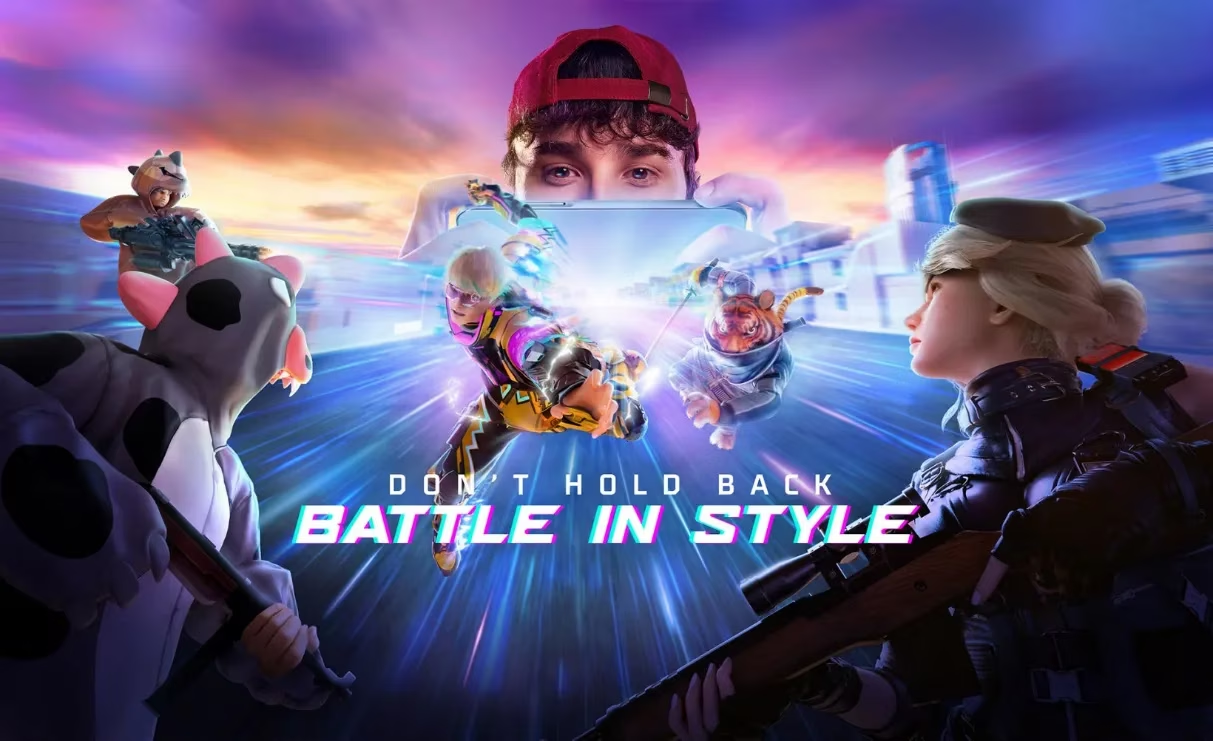
But a new look and a heartwarming story wouldn’t be enough to sustain a brand renaissance. Garena knew that the soul of Free Fire lay in its community—a chaotic, creative, and deeply loyal force. So, alongside the rebrand, they introduced the FF Co-Lab, a global co-creation program designed to blur the line between developer and player. The Co-Lab serves as a dynamic platform where casual fans, professional streamers, and brands can unite to produce content that directly shapes the game. Why simply play a character when you could see your own artwork immortalised on a weapon skin or graffiti tag? To answer that question, Garena launched the first Co-Lab challenge: Light Up The Map. This contest invited artists from every corner of the world to submit Free Fire-inspired pieces. The winning entries weren’t just displayed on a social media feed—they were woven into the fabric of the game itself, granting creators a permanent legacy in the battle royale they loved.
The impact of the brand rework rippled through 2026 with measurable results. Here’s how the pillars of the transformation stacked up:
| Pillar | What Changed | Player Experience |
|---|---|---|
| Visual Identity | Modernised logo and knife icon | Instantly recognisable, aspirational aesthetic |
| Slogan & Narrative | “Battle is Style” & Maxim’s journey | Emotional connection, motivation to improve |
| Co-Creation (FF Co-Lab) | Light Up The Map contest, collaborative tools | Sense of ownership, creativity rewarded |
Could any of this have worked if the core gameplay hadn’t kept pace? Not a chance. Free Fire had been steadily evolving long before the rebrand, and 2026 saw that trend accelerate. The constant injection of unique modes, weapon balancing, and map reworks ensured that the stylish exterior was backed by rock-solid mechanics. The game’s ability to listen to its players—whether through balancing adjustments or hosting user-generated content—proved that the “Battle is Style” mantra wasn’t just a tagline; it was a design philosophy.
The rebrand also opened the doors to collaborations that felt more organic than ever. With a cohesive identity and a built-in co-creation pipeline, partnerships could seamlessly integrate into the Free Fire universe without feeling like forced advertisements. The knife icon itself became a canvas, spawning collector’s edition virtual items that players clamored for.
So, after five years of dominance, did Free Fire truly need a rebrand? The answer, written in the vibrant art and renewed player engagement of 2026, was a resounding yes. Garena proved that even a giant can learn new tricks—by passing the mic to its community, telling stories that matter, and declaring that style isn’t just an afterthought; it’s the ultimate weapon. As Maxim’s tale suggests, sometimes you have to leave the ordinary behind to find the extraordinary fight waiting for you. In the new Free Fire, every drop onto the island is a chance to make a statement.