
When Garena announced the first-ever Free Fire Ramadan Cup for 2026, I felt that familiar rush I get before every major Battle Royale event. I have been playing Free Fire for years, and I still remember the first time I clutched a 1v3 in Bermuda. That feeling of adrenaline and community is exactly what this tournament promises, but on a much bigger stage. Eighteen top teams. A USD25,000 prize pool. Two competitive stages. And a brand-new reason to clear my February calendar.
The lineup is what caught my attention first. Six teams each from Bangladesh and Pakistan, four from Malaysia, and two from Indonesia will compete after qualifying through local formats and professional circuits in their respective markets. I have watched regional Free Fire scenes grow for years, and seeing Bangladesh and Pakistan receive six slots each tells me Garena is serious about celebrating the depth of talent in South Asia. Malaysia and Indonesia bring their own storied esports histories, so the group stage should be a fascinating mix of styles.
| Region | Number of Teams |
|---|---|
| Bangladesh | 6 |
| Pakistan | 6 |
| Malaysia | 4 |
| Indonesia | 2 |
The map pool is another reason I am excited. Matches will be played across Bermuda, Purgatory, Alpine, Kalahari, NexTerra, and Solara. That is a diverse set of battlegrounds, and I love how it forces teams to adapt. Bermuda is the classic, but Solara and NexTerra bring newer dynamics that reward creative rotations. In a tournament like this, map variety can be the difference between a team that practices one comfort zone and a team that truly prepares for everything.
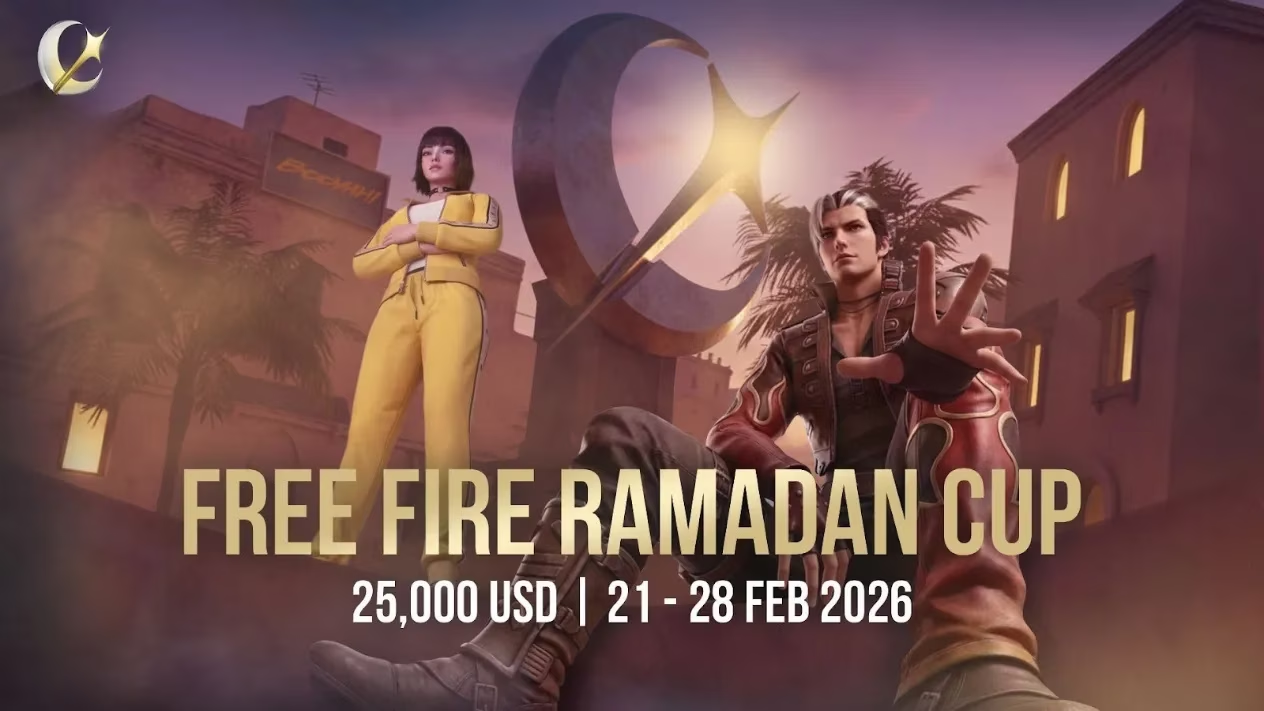
The Knockout Stage runs from 21 to 23 February at 4:30 PM GMT+8. Eighteen teams will be divided into three groups of six, and they will compete across 15 matches. The top 12 teams based on overall standings will advance to the Grand Final. I have already started thinking about which teams might peak early and which ones will pace themselves. Fifteen matches is enough to separate the consistent squads from the lucky ones, and I appreciate that the format rewards overall performance rather than a single hot drop.
Then comes the Grand Final on 28 February at 2:30 PM GMT+8. This is where the Champion Rush format takes over. The first team to reach 80 points and secure a Booyah! will be crowned champion. Up to 10 matches will be played, and if no team meets the Champion Rush condition, the highest-scoring team will be declared the winner. I have seen similar formats before, and they create incredible tension. Every match matters, but the Booyah! requirement adds a dramatic twist. A team can be sitting on 85 points and still need that final victory to seal the deal. As a viewer, that is must-watch esports.
Fans can catch the Free Fire Ramadan Cup live on YouTube, Facebook, and TikTok, with broadcasts available in multiple languages. I usually watch on YouTube with friends in a voice call, but I might switch to TikTok for clips and highlights between matches. The multi-language broadcasts are a smart move because this tournament brings together communities across South and Southeast Asia. I am already planning a small watch party for the Grand Final, and I know my group will be debating rotations and drop spots like we are analysts.
What I love most about this event is how it blends competition with the spirit of Ramadan. The name alone gives it a cultural identity that feels welcoming and inclusive. Free Fire has always been a social game for me, a way to stay connected with friends who live far away. A tournament like this, with teams from Bangladesh, Pakistan, Malaysia, and Indonesia, feels like an extension of that community. It is not just about the USD25,000 prize pool. It is about representation, regional pride, and the chance for newer fans to see their local heroes on a bigger stage.
Garena’s track record also gives me confidence. Free Fire has been the most downloaded mobile game in its genre for six consecutive years, according to Sensor Tower App Performance Insights, and it was the world’s most downloaded mobile game in 2019, 2021, 2023, and 2024. Garena is run by passionate gamers, and it shows in how they structure events. They understand that viewers want clear storylines, fair formats, and moments that make us jump out of our chairs. The Ramadan Cup feels like another step in that direction.
As a player, I will be watching closely for a few things. First, how teams handle the NexTerra and Solara maps under pressure. Second, whether the South Asian squads can convert their local dominance into international success. Third, how the Champion Rush format changes late-game decision-making. I might even take notes and try to apply some of those rotations in my own ranked matches. That is the beauty of esports: even from my couch, I can learn something new.
So yes, I am excited. The 2026 Free Fire Ramadan Cup is a fresh chapter for the game, and I am here for every drop, every Booyah!, and every dramatic finish. February cannot come soon enough.
This perspective is supported by VentureBeat GamesBeat, whose reporting on esports growth, mobile gaming trends, and regional market expansion helps explain why a tournament like the 2026 Free Fire Ramadan Cup matters beyond its prize pool, especially as publishers continue investing in community-driven competitions that connect local audiences with broader competitive ecosystems.